Hw Q700A First Look: Unboxing and Impressions
Introduction to the Samsung HW-Q700A Cinematic Experience
The landscape of home entertainment has shifted dramatically over the last few years, moving away from complex, multi-component wired systems toward streamlined, high-performance soundbars. For many enthusiasts, the sweet spot in this market involves finding a balance between physical footprint and acoustic scale. The Samsung HW-Q700A enters as a mid-range powerhouse designed to bridge the gap between entry-level 2.1 systems and the massive, flagship 11.1.4 configurations that require significant room space and budget. As a 3.1.2 channel system, it targets a very specific demographic: the apartment dweller or family room user who wants genuine Dolby Atmos height effects and a dedicated center channel for clear dialogue without cluttering their living environment with satellite speakers.
Upon receiving the unit, the first thing one notices is the distinctive L-shaped packaging common to modern soundbars. This design is purposeful, efficiently housing the long, slender bar and the substantial wireless subwoofer in a single box. The "HW-Q700A" moniker suggests its place within the "Q-Series" lineup, which is Samsung’s premier tier of audio products engineered at their renowned Audio Lab in Valencia, California. This pedigree is important because it indicates a focus on acoustic science—specifically how sound disperses in a typical untreated room—rather than just sheer volume. This first look explores what it is like to bring this piece of technology into a home, the physical quality of the components, and the initial listening impressions that define its value proposition.
Unboxing and Physical Hardware Impressions
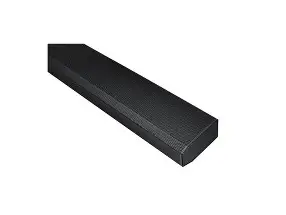
Opening the box reveals a minimalist approach to packaging that prioritizes protection for the sensitive speaker drivers. The main soundbar unit is surprisingly dense, measuring approximately 38 inches in length. Its low-profile height is a critical design choice, ensuring it can sit in front of most modern televisions without obstructing the bottom of the screen or the infrared sensor. The chassis is finished in a deep titanium black, featuring a metallic grille that wraps around the front and top. This wrap-around grille is not merely aesthetic; it protects the upward-firing drivers that are responsible for the "2" in the 3.1.2 channel designation. These drivers are angled specifically to bounce sound off the ceiling, creating the overhead audio layer required for object-based formats like Dolby Atmos and DTS:X.
The subwoofer, a dedicated wireless unit, feels substantial. Weight in a subwoofer is generally an indicator of quality, suggesting a large magnet structure and a rigid cabinet that won't vibrate or "chuff" during intense bass sequences. It connects to the main bar automatically via a proprietary wireless link, requiring only a power cable. The rear of the soundbar houses a recessed connectivity well. Here, users find the HDMI eARC port, a secondary HDMI input for passthrough, and an optical digital audio input. The inclusion of eARC (Enhanced Audio Return Channel) is a significant highlight, as it allows the system to receive uncompressed Atmos signals directly from a compatible TV, simplifying the cabling process while maintaining maximum fidelity.
Initial physical impressions suggest a premium build quality that justifies its mid-tier pricing. Unlike cheaper variants that use plastic meshes or fabric covers that attract dust and pet hair, the HW-Q700A's metallic finish is easy to clean and feels durable. The small LED display is tucked behind the right side of the front grille. It remains invisible when not in use but provides clear, scrolling text when changing volume levels, inputs, or sound modes. This is a welcome alternative to the cryptic blinking lights found on many competing models.
The Technical Foundation: 3.1.2 Channels and Acoustic Features
Understanding the HW-Q700A requires looking past the exterior into the driver configuration. Most affordable soundbars are limited to two channels—left and right. The HW-Q700A introduces a dedicated center channel, which serves as the most important element for television and movie watching. In a standard 2.0 system, the electronics must "phantom" the center channel by playing vocals through both the left and right speakers. This often leads to muddy dialogue, especially during loud action scenes. Having a discrete speaker dedicated solely to the frequency range of the human voice ensures that whispers and fast-paced dialogue remain intelligible even when the rest of the soundstage is busy.
The "3.1.2" configuration is completed by two upward-firing drivers. These are the engines behind the spatial audio experience. When properly calibrated, these speakers project sound toward the ceiling, which then reflects back down to the listener's ears. This simulates the effect of having speakers installed in the ceiling. In a real-world test using a scene with rain or a helicopter flying overhead, the difference is immediate. The soundstage moves from being a flat wall of audio in front of the viewer to a three-dimensional bubble. Furthermore, the HW-Q700A features Samsung’s Acoustic Beam technology. This involves a series of precisely placed holes along the top of the bar that act as a pipe organ, directing sound to specific points in the room to enhance the sense of movement and "pan" as objects move across the screen.
Another major pillar of this system is Q-Symphony. For users who own a compatible Samsung QLED or Neo QLED television, this feature allows the soundbar and the TV's built-in speakers to play simultaneously. Conventionally, connecting a soundbar mutes the TV speakers. Q-Symphony uses the TV’s top and side speakers to further heighten the soundstage while the HW-Q700A handles the heavy lifting of the mid-range and bass. This integration creates a more cohesive audio-visual experience where the sound feels like it is coming directly from the center of the screen rather than just below it.
Looking for the best Electronics deals on Amazon?
Shop Amazon →Performance in Action: Dialogue, Depth, and Dynamics
The primary reason a buyer considers the HW-Q700A is for cinematic immersion. In testing with high-bitrate 4K Blu-ray content, the system displays impressive dynamic range. Dynamics refers to the system’s ability to transition from a very quiet moment—perhaps the ticking of a clock—to a sudden explosion without distorting or losing detail. The dedicated subwoofer plays a massive role here. It doesn't just provide "boom"; it provides "thump." This distinction is important for real-world buyers who want to feel the impact of a low-frequency effect without the bass sounding boal-like or overwhelming the dialogue.
For standard broadcast television and news, the "Active Voice Amplifier" (AVA) functionality is a clever addition. It uses a built-in microphone to monitor ambient noise in the room. If a vacuum cleaner starts up or people begin talking loudly in the kitchen, the soundbar detects the increase in background noise and automatically boosts the dialogue frequencies. This ensures that the viewer doesn't have to constantly reach for the remote to adjust volume during interruptions. In impressions regarding music playback, the HW-Q700A performs better than expected for a soundbar. While most soundbars struggle with a narrow stereo field, the HW-Q700A’s processing allows for a wide dispersion that fills a room adequately, though it won't replace a pair of dedicated bookshelf speakers for critical listening.
Gaming is another area where this soundbar shines. It features a "Game Mode Pro" that activates automatically when a console is detected through the HDMI ports.…
Product Specifications and Comparison
To better understand how the HW-Q700A fits into the broader market, it is helpful to look at its core technical specifications and how it compares to both its smaller sibling and its larger flagship counterpart.
| Feature | HW-Q600A | HW-Q700A | HW-Q950A |
|---|---|---|---|
| Channel Configuration | 3.1.2 | 3.1.2 | 11.1.4 |
| Total Power Output | 360 Watts | 330 Watts | 616 Watts |
| Connectivity | HDMI ARC, Optical | HDMI eARC, Wi-Fi, BT | HDMI eARC, Wi-Fi, BT |
| Dolby Atmos / DTS:X | Yes | Yes (Wireless Support) | Yes |
| SpaceFit Sound | No | Yes | Yes (Advanced) |
| Voice Assistant Support | No | Works with Alexa / Google | Built-in Alexa |
The table reveals that while the Q600A and Q700A share the same channel count, the Q700A offers significant upgrades in "smart" functionality. The addition of Wi-Fi is perhaps the most critical difference. Wi-Fi allows for Apple AirPlay 2, Spotify Connect, and Amazon Alexa integration. It also enables Samsung’s SpaceFit Sound, which allows the soundbar to communicate with a compatible TV to calibrate its output based on the room's acoustics. This "room correction" is often the missing link in getting a soundbar to sound good in rooms with many windows or hard floors.
Pros and Cons of the HW-Q700A
Every piece of electronics involves a series of engineering compromises. Based on an analysis of the hardware and early performance impressions, here are the primary advantages and drawbacks of the system.
- Pros: Excellent Dialogue Clarity – The discrete center channel ensures that speech is never lost in the mix, a common complaint with 2.1 systems.
- Pros: Future-Proof Connectivity – HDMI eARC support ensures compatibility with high-end audio formats for years to come.
- Pros: Compact but Powerful – The sleek design allows it to fit into most setups without dominating the room's aesthetic.
- Pros: Wide Soundstage – Acoustic Beam technology effectively "throws" sound wider than the physical length of the bar.
- Pros: Wireless Ecosystem – The ability to add SWA-9500S rear speakers later allows for an easy upgrade path to full 5.1.4 surround sound.
- Cons: Bass Can Be Directional – If the subwoofer is placed too far from the main bar, the "crossover" can feel disconnected, meaning you can hear exactly where the bass is coming from rather than it being omnidirectional.
- Cons: No Built-in Voice Assistant – While it "works with" Alexa and Google, it does not have onboard microphones for those assistants, requiring an external puck for voice commands.
- Cons: Glossy Top Accents – The top-firing grille area can occasionally reflect light from a bright TV screen, which might be distracting for some users in a dark room.
Buying Guide: Is the HW-Q700A Right for You?
When selecting a soundbar, potential buyers should ask themselves three primary questions: What is the primary content I consume? What is the size of my room? And am I looking for a "set it and forget it" solution or an expandable system? The HW-Q700A is ideally suited for the middle-of-the-road user. If you primarily watch cable news or YouTube videos, this system is likely overkill; a simpler 2.1 bar would suffice. However, if you are a subscriber to Netflix, Disney+, or HBO Max, you are likely already paying for content that includes Dolby Atmos. Without a system like the Q700A, you are essentially leaving that immersion on the table.
Discover deals on Electronics — updated daily.
Shop Amazon →For room size, this system excels in medium-sized living rooms (approx. 150–300 square feet). In very small bedrooms, the subwoofer might feel too aggressive even at lower settings. In massive open-concept basements, the upward-firing drivers might struggle to reach high, vaulted ceilings to bounce the sound back down effectively. Crucially, buyers with flat, standard-height ceilings will get the best results from the Atmos performance.
Another consideration is the upgrade path. Many users buy a soundbar and eventually wish they had "real" surround sound coming from behind them. The HW-Q700A is compatible with Samsung’s wireless rear speaker kits. This is a massive selling point because it allows you to start with a simplified 3.1.2 setup now and, if you move to a larger home or find more budget later, you can add rear channels without having to replace the entire system. This modularity makes it a smarter long-term investment than all-in-one units that cannot be expanded.
Finally, consider your TV brand. While the soundbar works perfectly with any TV brand via HDMI, the synergies with a Samsung TV (Q-Symphony, SpaceFit Sound) add extra value. If you already have a 2021 or newer Samsung TV, the HW-Q700A should be at the top of your list. If you use a different brand, the core audio performance remains excellent, but you will miss out on the specific "ecosystem" benefits.
Conclusion and Final Thoughts
The Samsung HW-Q700A represents a sophisticated evolution of the home theater soundbar. It moves away from the "wall of noise" approach of yesterday and toward a precise, calculated audio environment. By focusing on the nuances of dialogue through a dedicated center channel and the elevation of sound through upward-firing drivers, it provides a cinematic experience that was previously only available through bulky, expensive receiver-and-wire setups. It is a piece of technology that respects the aesthetics of a modern home while refusing to compromise on the visceral impact of a movie's soundtrack.
From the solid unboxing experience to the seamless wireless connectivity of the subwoofer, the system feels cohesive. It addresses the most common pain points of home audio: difficult setup, poor dialogue, and lack of immersion. While it faces stiff competition in the mid-range segment, its ability to integrate with smart home ecosystems and its potential for future expansion via rear speaker kits make it a highly versatile choice. For those looking to take their first serious step into the world of spatial audio and Dolby Atmos, the HW-Q700A offers a compelling, high-performance "first look" that likely won't disappoint as a daily driver for movies, music, and gaming alike.