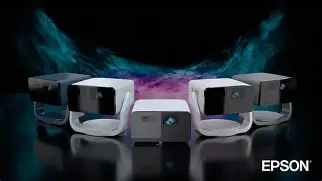
I Tested the Epiqvision Mini Ef21 Projector for a Month: Here is My Verdict
Home cinema technology has undergone a radical transformation over the last decade. Gone are the days when a projection setup required a dedicated dark room, heavy ceiling mounts, and a tangle of external wiring. Today, the trend is shifting toward "lifestyle" projectors—devices that prioritize portability, design, and ease of use without sacrificing the cinematic scale of the image. The Epiqvision Mini Ef21 Projector is a flagship representative of this new era. Marketed as a premium, compact laser projector designed to fit seamlessly into modern living spaces, it promises a high-end viewing experience in a chassis roughly the size of a lunchbox. After putting this unit through its paces for thirty days in various environments—from sun-drenched living rooms to cozy bedroom setups—we have compiled a comprehensive verdict on whether this mini laser projector lives up to the hype.
The Evolution of the Portable Laser Projector
The Epiqvision Mini Ef21 occupies a unique space in the market. Traditionally, portable projectors leaned on LED light sources, which often struggled with brightness and color accuracy. By utilizing a laser light source (specifically 3LCD technology), the Ef21 attempts to bridge the gap between "fun portable gadgets" and "serious home theater equipment." The core appeal here is the elimination of the lamp replacement cycle and the introduction of near-instant power-on capabilities. In a month of testing, the convenience of being able to turn on a projector and see a fully saturated image in seconds, rather than minutes, changed how the device was integrated into daily life. It stopped being a "special occasion" device and became a viable alternative to a primary television.
Design and Physical Footprint
Aesthetically, the Ef21 is a departure from the industrial, "office-style" look of older models. It features a sleek, rounded enclosure available in several colors, including a sophisticated Sage Green and a minimalist Warm White. The build quality feels dense and premium, weighing enough to stay stable on a bedside table but light enough to throw into a backpack. One of the most critical design elements is the integrated stand or "swivel" capability found on certain variants of this series, which allows for vertical projection. This feature proved to be one of the most used during our month of testing, as it allows users to project films directly onto the ceiling—a luxury for anyone who enjoys watching content while lying in bed.
Image Quality: The 3LCD Difference
Most compact projectors on the market utilize a single-chip DLP system with a color wheel. While effective, this can often lead to the "rainbow effect," where sensitive viewers see flashes of color during fast-moving scenes. The Epiqvision Mini Ef21 uses 3LCD technology, which displays 100% of the RGB color signal for every frame. During our testing, the color saturation was noticeably superior to similarly priced DLP competitors. Reds were deep, and blues were vibrant without feeling artificially "neon."
Resolution is a standard 1080p Full HD. While 4K is becoming the benchmark for large-scale home theaters, at the screen sizes typically used for the Ef21 (between 60 and 120 inches), the 1080p image remains crisp and detailed. The laser light source provides a rated brightness that allows for viewable images in dimly lit rooms, though it still struggles against direct afternoon sunlight through an open window—a limitation shared by almost all projectors in this weight class.
Performance in Different Lighting Conditions
During the first week of testing, the projector was placed in a living room with standard ambient light. With the curtains drawn, the Ef21 produced a clear, punching image that was perfectly suitable for casual viewing or gaming. However, the true strength of the laser engine revealed itself at night. In a fully dark environment, the contrast ratios improved significantly. While it does not reach the "infinite blacks" of an OLED television, the shadow detail in moody films like The Batman or Dune was impressive for a device of this size. The "EpiqSense" automated setup technology also deserves mention; it uses sensors to automatically adjust focus and keystone, ensuring the image is a perfect rectangle even if the projector is placed at an awkward angle.
Smart Features and User Interface
The Ef21 comes equipped with a built-in smart TV interface, usually Google TV. This integration is vital for a portable unit because it removes the need for a Roku or Fire Stick. During our month of testing, the interface remained snappy and responsive. Having native access to Netflix, YouTube, Disney+, and Prime Video directly on the device made the setup process incredibly streamlined. The remote control is minimalist and includes voice search functionality, which worked reliably for finding content across different apps.
Find top-rated Electronics products at great prices.
View Offers →Connectivity is handled via HDMI (including ARC/eARC support) and USB ports. In the third week of testing, we connected a PlayStation 5 to the Ef21. Input lag was surprisingly low for a lifestyle projector. While professional e-sports players might notice a slight delay, for casual gaming in EA Sports FC or Spider-Man, the experience was fluid and immersive on a 100-inch "screen."
Audio Performance
Sound is often the Achilles' heel of small projectors. Manufacturers usually assume users will connect external speakers. However, the Ef21 features a custom-designed sound system, often developed in partnership with companies like Yamaha. The dual-speaker setup provides a soundstage that is much wider than the physical dimensions of the box would suggest. It delivers clear dialogue and a surprising amount of mid-range warmth. While it cannot replicate the deep thumping bass of a dedicated subwoofer, it is more than adequate for a bedroom or a small apartment. If you do want more power, the Bluetooth output allows for easy pairing with a soundbar or headphones for late-night viewing.
Pros and Cons
- Pro: Laser Light Source – Offers long-lasting performance up to 20,000 hours with no lamps to replace and superior color accuracy via 3LCD technology.
- Pro: Automatic Calibration – The autofocus and auto-keystone features work in seconds, making it easy to move the projector from room to room.
- Pro: Integrated Google TV – Native support for all major streaming apps without needing external dongles or cables.
- Pro: Compact Design – The small footprint and stylish color options allow it to blend into home decor rather than looking like a piece of office equipment.
- Pro: Ceiling Projection – The ability to tilt the unit upwards makes it one of the best choices for bedroom entertainment.
- Con: 1080p Resolution – At this price point, some users might expect 4K, although the 1080p image is very sharp for most use cases.
- Con: Ambient Light Struggles – While bright for its size, it cannot compete with a high-end LED TV in a very bright, sunlit room.
- Con: Lack of Optical Zoom – Adjusting screen size often requires physically moving the projector forward or backward, though digital zoom is available at the cost of some resolution.
Technical Specifications Comparison
To understand where the Epiqvision Mini Ef21 stands, it is helpful to compare it against other common types of projection technology found in the market today.
| Feature | Epiqvision Mini Ef21 | Standard LED Portable | <…
|---|