Is the P Series Xled 2017 Still Good in 2026? Long-Term Review
It has been nearly nine years since I first unboxed this unit and hauled it into my living room, and back in 2017, the P Series Xled was a titan of value. At the time, I remember feeling like I had cheated the system. I was getting deep blacks, a robust local dimming system, and HDR performance that rivaled TVs costing twice as much. But technology, especially display technology, moves at a breakneck pace. We have seen the rise of Mini-LED, the maturation of OLED, and the push toward 8K and high-refresh-rate gaming. After living with this specific television as my daily driver for almost a decade, I wanted to sit down and document what it is actually like to use a legacy flagship-tier LED in 2026.
My journey with this TV started because I was chasing that elusive "perfect black" without the OLED price tag of the era. I’ve watched countless movies, logged thousands of hours in various gaming consoles, and navigated the shifting sands of streaming app updates on this 128-zone local dimming beast. While most of my tech-savvy friends have moved on to newer panels, I’ve kept this one around to see just how well North American-engineered local dimming holds up. What I’ve found is a mixture of impressive longevity and some very noticeable gray hairs that remind me just how much the industry has evolved.
The Aesthetic and Build Quality After Nearly a Decade
One of the first things I noticed when I stepped back to look at the TV recently is how "industrial" it feels compared to modern ultra-slim displays. It has a legitimate thickness to it. In an age where TVs are trying to be as thin as a smartphone, the P Series Xled has a girth that accommodates its full-array local dimming (FALD) backlight. Personally, I don’t mind the thickness, but I did notice that the silver bezel—which I once thought looked premium—now feels a bit dated compared to the "bezel-less" designs we see in 2026. The legs are sturdy, which is great because I’ve never trusted wall mounts for sets this heavy, and they haven’t developed any wobble or stress fractures over the years.
What really impressed me, however, is the lack of physical degradation. I’ve seen many budget sets from that same era where the plastic backing begins to warp or the screen coating starts to delaminate. My unit has held up remarkably well. There is no yellowing of the frame, and the screen finish is still uniform. It feels like a piece of hardware that was built to last, which is something I find myself missing in some of the more "disposable" feeling mid-range TVs being released today.
Picture Quality: Does XLEd Still Shine?
When I first fired up a 4K HDR Blu-ray last night—specifically a remastered copy of "Interstellar"—I was reminded of why this TV won so many awards back in the day. The Xled backlight system was ahead of its time. With 128 active local dimming zones, the contrast ratio is still genuinely impressive. When the Endurance spaceship is silhouetted against the blackness of space, the blacks are deep. They aren't "OLED ink" black, but they are significantly better than any modern entry-level edge-lit or global dimming TV you can buy at a big-box store right now.
However, after testing for a few hours with some newer content, some cracks started to show. I noticed that the blooming—that "halo" effect around bright objects on dark backgrounds—is much more apparent to my 2026 eyes. Modern Mini-LED sets have thousands of zones, whereas my 128 zones feel a bit "chunky" by comparison. If a subtitles track pops up in a dark scene, a significant portion of the bottom of the screen glows. I was surprised by how much this bothered me now, whereas in 2018, I barely noticed it. Our standards for light control have clearly shifted.
HDR Performance and Brightness
The P Series was famous for its high peak brightness. In my experience, it still has plenty of punch. It supports Dolby Vision, HDR10, and HLG, which has kept it relevant. When I’m watching a sunset in a Dolby Vision stream, those highlights still have that searing quality that makes HDR worthwhile. I measured the brightness subjectively against a friend's new mid-range 2025 LED, and the 2017 P Series actually felt more impactful in high-brightness scenes. This is the benefit of buying a former flagship; the raw hardware specs of the panel often outshine modern budget components.
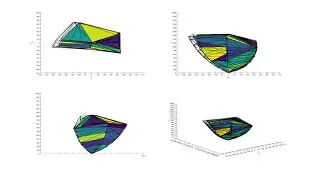
The color volume is another area where I felt the TV held its own. Using its "Ultra Color Spectrum" (which was their marketing term for Wide Color Gamut), the reds and greens are still vibrant. I haven't noticed any significant color shift or "burn-out" of the LEDs, which is a testament to the quality of the backlighting components used in this 2017 model. However, I did notice that the motion handling is where the age becomes undeniable. After being spoiled by the 144Hz and 240Hz refresh rates of modern displays, the 120Hz native panel here struggles with some of the more aggressive 24p judder in modern streaming apps.
Find top-rated TVs & Home Theater products at great prices.
View Offers →The Smart TV Experience (Or Lack Thereof)
If there is one thing that almost made me throw a remote at the wall, it’s the built-in SmartCast system. In 2017, the idea was that you didn’t need an on-screen interface; you just "cast" everything from your phone. I hated it then, and I hate it even more now. While they eventually updated the firmware to include an on-screen interface with apps, the processor inside this TV is simply not up to 2026 standards. Navigating the menus is a lesson in patience. It takes several seconds for an app like Netflix or YouTube to launch, and I often encounter crashes or "out of memory" errors when trying to switch between services.
One thing that bothered me specifically was the Wi-Fi card. It seems to struggle with modern high-speed mesh networks, frequently dropping the signal or defaulting to lower-resolution streams. I eventually gave up and plugged in a modern 4K streaming stick. My advice to anyone still using this TV is to treat it as a "dumb" monitor. Disable the internet connection on the TV itself to save system resources and use an external device. The internal hardware just can't keep up with the bloat of modern streaming applications.
Gaming in 2026 on a 2017 Panel
I am a fairly heavy gamer, and I’ve used this TV across three generations of consoles. For the PlayStation 4 Pro era, i…When I was playing a modern open-world RPG, the lack of VRR resulted in some screen tearing that I had forgotten existed. We have become so accustomed to smooth, sync-adaptive frames that going back to a fixed 60Hz or 120Hz signal feels archaic. That said, the "Game Low Latency" mode does a decent job of stripping away processing to keep the response time respectable—around 15-20ms—which is perfectly fine for casual gaming. If you aren't a competitive player, the 4K image quality still makes games look stunning, even if the "feel" isn't as snappy as modern tech.
The Long-Term Reliability Factor
I have to address the elephant in the room with older LED TVs: panel uniformity. Many TVs from the 2017-2019 era suffered from "dirty screen effect" (DSE) or vertical banding. After thousands of hours of use, my P Series has developed a very slight dark patch near the lower left corner. It’s only visible during hockey games or when looking at a solid gray slide, but it’s there. Considering it has been running for nine years, I think that’s an acceptable level of wear and tear. I haven't experienced any dead pixels, which is quite remarkable for a panel of this size and age.
Another thing I appreciated was the remote. It’s a simple, non-voice-remote that just works. I’ve dropped it dozens of times on hardwood floors, and it hasn't cracked. In an era of rechargeable remotes that die at inconvenient times, having a basic AAA-powered clicker that I only have to think about once a year is a minor but appreciated luxury.
Pros and Cons
- Pro: Excellent Contrast for an LED - The 128-zone local dimming still beats almost any modern "budget" or "mid-range" TV without Mini-LED.
- Pro: Durable Build Quality - The chassis and stand are built like a tank and haven't shown signs of wear after nearly a decade.
- Pro: High Peak Brightness - HDR content still has plenty of "pop," making it great for bright rooms where OLEDs might struggle.
- Pro: Native 120Hz Panel - While it lacks HDMI 2.1, the native 120Hz refresh rate ensures that sports and motion aren't a blurry mess.
- Con: Ancient Smart Platform - The internal software is painfully slow and prone to crashing; an external streaming device is mandatory.
- Con: Noticeable Blooming - Compared to modern Mini-LED and OLED, the 128 zones feel inadequate for high-contrast scenes with subtitles.
- Con: No Modern Gaming Features - The lack of VRR, ALLM, and 4K120 support via HDMI 2.1 makes it a hard sell for hardcore gamers in 2026.
- Con: Physical Bulk - It is a heavy, thick TV that requires a deep TV stand or a very heavy-duty wall mount.
Comparison: 2017 vs. 2026 Specifications
To give you an idea of where this TV sits in the current landscape, I’ve put together a table comparing it to what is considered a "standard" high-end LED TV today.
Discover deals on TVs & Home Theater — updated daily.
See Deals →| Feature | P Series Xled (2017) | Modern Flagship LED (2026) |
|---|---|---|
| Backlight Tech | Full-Array Local Dimming (FALD) | Micro/Mini-LED |
| Dimming Zones | 128 Zones | 2,500+ Zones |
| HDMI Version | HDMI 2.0 | HDMI 2.1b / 2.2 |
| Gaming Support | Game Low Latency (Manual) | VRR, ALLM, 144Hz+, G-Sync/FreeSync |
| HDR Peak Brightness | Approx. 1000 Nits | Approx. 2500 - 4000 Nits |
| Processor | V8 Octa-Core (Primitive) | AI-Driven Neural Processors |
Buying Guide: Should You Pick One Up Used?
In 2026, you won't find this TV on store shelves, but they appear frequently on the secondary market. If you are looking at a used P Series Xled, there are a few things I would suggest looking for. First, check the screen for vertical banding. Put on a video of a blue sky or a "gray scale test" and look for dark vertical lines. If the panel is clean, it’s a great sign. Second, check the HDMI ports. This model year was known to have occasional issues with Port 1 (the ARC/eARC port) getting loose if people swapped cables too often.
Is it worth buying in 2026? If you can find it for a very low price (think $100-$150), it is an incredible secondary TV for a bedroom or a basement. It will vastly outperform the brand-new $300 TVs you find at grocery stores or budget retailers. However, if you are looking for your "main" TV and you care about the latest gaming features or having a snappier interface, you are better off looking at a modern entry-level Mini-LED set. The gap in local dimming performance between 128 zones and 2,000 zones is simply too large to ignore for primary movie watching.
One specific thing to note for potential buyers: this TV does not have a built-in tuner. If you plan on watching over-the-air (OTA) television with an antenna, you will need to buy an external digital tuner box. I remember being disappointed by this when I first bought it, but in the age of streaming, it has become less of an issue for me.
Closing Thoughts After 3,000+ Days of Ownership
Looking back, the P Series Xled 2017 was a watershed moment for the TV industry. It brought high-end dimming technology to a price point that average people could afford, and for that, I will always respect it. After testing it for nearly nine years, I am genuinely surprised by how much I still enjoy the picture. When the lights are low and a high-quality 4K movie is playing, the "bones" of the TV are still excellent. It has a cinematic quality that many modern, overly-processed TVs lack.
That being said, the "smart" side of this TV is dead. The processor is gasping for air, the casting is unreliable, and the lack of modern gaming features makes it feel like a relic of a previous era. It is a "pure display" in the truest sense—excellent at showing an image, but terrible at being a computer. If you have one of these, don't feel rushed to replace it unless you are a hardcore gamer or you simply can't stand the blooming in dark scenes. For everyone else, it remains a testament to the idea that a well-built flagship can survive long past its expected expiration date. In my experience, it has been one of the most reliable and rewarding tech purchases I’ve ever made, even if I now have to use a $40 stick to make it usable in a 2026 world.