Msi Cubi Nuc Ai Plus 2Mg First Look: Unboxing and Impressions
Introduction
The MSI Cubi NUC AI+ 2MG is an unusual product to cover in the Laptops category—because it is not a laptop at all. Yet it increasingly competes for the same buyers: people who want a compact, quiet, modern Windows PC for everyday productivity, light creative work, and “AI PC” features, but who don’t necessarily need a built-in screen and keyboard. In offices, classrooms, retail counters, and home workspaces, a tiny desktop that can mount behind a monitor can deliver a laptop-like experience with fewer compromises around ports, networking, and permanence.
This first-look article focuses on what matters most to typical buyers: what the Cubi NUC AI+ 2MG is designed to do, what the physical design and I/O suggest about daily usability, how the “Copilot+ PC” positioning may (or may not) change workflows, and what to check before choosing a configuration. It is an editorial “unboxing and impressions” style analysis—less about benchmark charts and more about real-world expectations.
What the MSI Cubi NUC AI+ 2MG Is (and Who It’s For)
At a glance, the Cubi NUC AI+ 2MG is a 0.826-liter mini PC designed to disappear into a workspace: behind a monitor, under a desk, or tucked into a small shelf. It targets buyers who care about:
- Minimal footprint without feeling like a compromised “thin client”
- Modern connectivity for docks, monitors, fast storage, and peripherals
- Reliable wired networking (including dual LAN on many business-focused mini PCs)
- Quiet, low-clutter setup for conference rooms, reception desks, and home offices
- AI-accelerated workflows and Windows “Copilot+ PC” feature readiness
It is also relevant to laptop shoppers who are considering a laptop primarily as a “CPU box” connected to an external monitor. If the system is going to live docked most of the time, a mini PC can be a more ergonomic and cable-friendly option—especially where dual Ethernet, multiple USB-A ports, or a semi-permanent mount is useful.
Unboxing Expectations: What You’re Likely to Find (and What You Should Check)
“Unboxing” a mini PC is usually less dramatic than unboxing a laptop: there is no screen to peel, no hinge to test, and fewer premium materials to show off. Still, for practical buyers, the unboxing moment is about verifying that the essentials for deployment are present.
Typical in-box items (varies by region and bundle)
- The mini PC unit (Cubi NUC AI+ 2MG)
- Power adapter (MSI specifies a 120W adapter for this series)
- Documentation (quick start guide, regulatory leaflets)
- VESA mounting hardware in some bundles (important if the plan is to mount behind a monitor)
What to verify immediately: the exact CPU model, memory capacity, storage size, wireless standard (Wi‑Fi 6E vs Wi‑Fi 7), and whether any mounting bracket is included in your specific SKU. Mini PCs are frequently sold in many near-identical variants, and retailers sometimes mix photos between models.
Design and Build Impressions
MSI lists the Cubi NUC AI+ 2MG chassis at 135.60 × 132.50 × 50.10 mm and a net weight of 0.667 kg. In practice, those numbers translate into a device that feels closer to a thick paperback book than a traditional desktop tower. This is the kind of form factor that can be mounted behind a monitor without making the display feel unstable, and it is small enough to be moved between rooms for temporary setups (training labs, pop-up offices, event signage) without hassle.
Build-wise, what buyers typically care about is less “premium feel” and more:
- Vent placement (will it breathe when mounted?)
- Port spacing (can multiple USB devices fit side-by-side?)
- Button placement (is it reachable when hidden behind a monitor?)
- Security basics (Kensington lock support, firmware security, and TPM availability)
Fingerprint power button and “Copilot” button: practical or gimmick?
One notable design choice is the power button with fingerprint security design on the front, plus a dedicated Copilot button. For business and shared workspaces, a fingerprint-enabled power button can be genuinely useful: it can reduce friction for quick sign-in, especially when the device is installed in a semi-public or semi-shared area (front desk, clinic check-in, lab kiosk). The Copilot button is more subjective; for users who are already relying on Windows’ assistant features, it can become a convenient muscle-memory shortcut. For others, it is simply another button that will be ignored.
Ports and Connectivity: The Practical Heart of the Cubi NUC AI+ 2MG
For many mini PC buyers, the decision is made—or broken—by I/O. MSI’s configuration is notable because it blends modern high-speed ports with business-friendly staples.
Front I/O (quick-access convenience)
- 2× USB 10Gbps Type-A
- 3.5 mm mic/headphone combo jack
- MicroSD card reader
- Power button with fingerprint security design
- Copilot button
The front USB-A ports matter for day-to-day workflows: plugging in a USB headset dongle, a flash drive, a wired keyboard, a barcode scanner, or a phone cable without reaching behind a monitor. The microSD slot is a small but welcome detail for anyone moving photos, drone footage proxies, or documents from cameras and handheld devices—though content creators working with large media should still plan on external SSDs over USB or Thunderbolt for speed and capacity.
Rear I/O (deployment and desk setup)
- 2× Thunderbolt 4 (DisplayPort alt-mode; MSI notes DP 2.1 alt-mode up to 4K@60Hz, plus power delivery behavior that varies by port)
- 2× USB 2.0 Type-A
- 2× RJ-45 2.5G LAN (Intel I226V)
- 1× HDMI out (4K@60Hz; MSI references HDMI 2.1 behavior)
This port selection suggests a clear intent: serious productivity and clean cable management. Thunderbolt 4 is especially important because it enables a single-cable desk setup with many docks: external displays, charging behavior (where applicable), wired networking, USB expansion, and external storage can run through one cable. Even if the Cubi NUC is mounted behind a monitor, Thunderbolt can reduce cable clutter dramatically.
The presence of dual 2.5GbE is a major differentiator versus most laptops and many consumer mini PCs. Real-world use cases include:
- Small office router/firewall or lab gateway roles (for advanced users)
- Network segmentation in business environments (one port for a secure VLAN, one for general traffic)
- Redundant connectivity for uptime-focused setups
- Fast local transfers to NAS devices for media libraries or backups
Security and physical management
- Kensington lock support
- dTPM 2.0 support
These features matter most for organizations and for home users who keep sensitive data locally. TPM support is also important for Windows 11 security features such as BitLocker (depending on edition and configuration).
Find top-rated Laptops & Computers products at great prices.
Browse Now →Performance Platform: Intel Core Ultra “V” Series, Arc Graphics, and an NPU
MSI lists the Cubi NUC AI+ 2MG series with Intel Core Ultra processors, including:
- Intel Core Ultra 9 288V
- Intel Core Ultra 7 258V
- Intel Core Ultra 5 226V
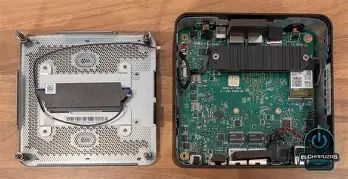
It pairs these with integrated Intel Arc graphics (Arc 140V on higher tiers; Arc 130V on the Ultra 5 tier per MSI’s spec listing). For typical buyers, the practical takeaway is:
- Everyday office work (multiple browser tabs, Teams/Zoom, Office apps, light multitasking) should feel comfortably fast on the right SKU.
- Light creative work (photo editing, simple timeline editing, asset prep, and streaming) should be viable—especially when paired with fast storage and ample memory.
- Gaming is not the primary target; integrated graphics can handle lightweight or older titles, but buyers looking for modern AAA performance should not expect miracles from a tiny, integrated-graphics-focused machine.
NPU: what “up to 48 TOPS” might mean in daily use
MSI states up to 48 TOPS for the NPU. While “TOPS” figures can be confusing (and are not a single, universal predictor of real-world speed), the buyer-relevant implication is that the system is designed to offload some AI workloads to dedicated hardware. That can help with tasks like on-device AI features, some creative AI effects, and Windows AI features that are built to use the NPU rather than pushing everything to the CPU or cloud.
For buyers, the honest expectation should be: an NPU can improve responsiveness and efficiency for supported features, but the day-to-day value depends heavily on whether the apps and Windows features you use actually take advantage of it.
Memory and Storage: The Trade-offs That Matter
Memory: fast, but not user-upgradable
MSI specifies Memory on Package (MOP) LPDDR5X, up to 8533 MT/s, with common configurations such as 32GB on the Ultra 7/9 options and 16GB on the Ultra 5 option. The key buyer implication is that this is typically not upgradeable later. That is a laptop-like trade-off in a desktop-like box.
Practical guidance: if the Cubi NUC will be used for heavy multitasking (dozens of browser tabs, large spreadsheets, multiple collaboration apps), content creation, or local AI tooling, buyers should strongly consider 32GB up front. If the workload is mostly email, web apps, and light productivity, 16GB can still be workable—but it may age faster over a 3–5 year ownership cycle.
Storage: a single M.2 2280 slot
MSI lists 1× M.2 2280 SSD. This is straightforward, but it influences buying decisions:…- Capacity planning matters because there may not be an additional internal drive bay for expansion.
- External storage strategy (USB/Thunderbolt SSDs, NAS) may be important for media-heavy workflows.
- Backup habits become even more critical when all local data sits on one primary SSD.
Wireless and Networking: Wi‑Fi 6E vs Wi‑Fi 7, and Why Dual LAN Is a Big Deal
MSI lists wireless options such as Intel Wi‑Fi 6E AX211 or Intel Wi‑Fi 7 BE201, plus Bluetooth 5.3 or 5.4 depending on the wireless module. The practical buyer advice is to decide based on your environment:
- Wi‑Fi 6E is already a strong choice for many homes and offices, especially where 6 GHz networks are available.
- Wi‑Fi 7 is most compelling if you have (or plan to buy) a Wi‑Fi 7 router and you care about higher peak throughput, better handling of dense networks, or future-proofing.
That said, the real differentiator for stable productivity is often still wired Ethernet. With two 2.5GbE ports, the Cubi NUC AI+ 2MG fits into business workflows that would be awkward on a laptop without adapters: fast local NAS access, reliable VoIP/video calls, and controlled network segmentation.
Real-World Use Cases: Where This Mini PC Makes Sense
Buyers typically care less about abstract specs and more about whether a device fits their actual day. Here are scenarios where the Cubi NUC AI+ 2MG looks well-matched:
1) Home office “laptop replacement” with a proper monitor setup
For users who keep a laptop docked 90% of the time, a mini PC can be simpler: fewer cables moving around, fewer worries about battery wear, and often more stable placement. Thunderbolt 4 makes it easier to build a desk that “just works” with docks, multiple displays, and fast external drives.
2) Small business front desk, reception, or point-of-service station
The small chassis can be hidden behind a monitor, the front ports handle peripherals, and the fingerprint-enabled power button can reduce sign-in friction for authorized staff. Dual LAN can also be helpful in environments with segmented networks.
3) Education labs and shared spaces
In classrooms or labs, compact PCs are easier to secure and maintain. If Wi‑Fi is congested, wired 2.5GbE can be a practical upgrade. The device’s small volume can also reduce desk clutter for student workstations.
Find top-rated Laptops & Computers products at great prices.
Shop Amazon →4) Conference rooms and collaboration hubs
Mini PCs are a natural fit behind large displays in meeting rooms. The ability to keep the PC mounted and connected while still offering quick-access front USB ports is a practical benefit for presenters.
5) Lightweight creative workstation paired with external storage
For photography hobbyists or light creators working with an external SSD or NAS, a compact PC with modern connectivity can be enough—especially if the workflow is more about organization, editing, and exporting than heavy 3D rendering.
Comparison: How the Cubi NUC AI+ 2MG Stacks Up Against Common Alternatives
A comparison table is useful here because shoppers often cross-shop mini PCs against laptops and other small desktops. Rather than treating this as a “winner-takes-all,” the goal is to clarify trade-offs.
| Category | MSI Cubi NUC AI+ 2MG (Mini PC) | Thin-and-light Laptop | Traditional Small Desktop (SFF) |
|---|---|---|---|
| Port flexibility | Strong: Thunderbolt 4, HDMI, multiple USB-A, dual 2.5GbE | Varies: often fewer USB-A ports; Ethernet usually needs an adapter | Often strong, but depends on chassis; may lack Thunderbolt |
| Desk clutter | Low: can mount behind monitor; clean cable routing possible | Medium: docking helps, but the laptop still occupies space when used | Medium to high: larger footprint than a mini PC |
| Mobility | Low: portable, but not “carry-to-coffee-shop” convenient | High: built for travel | Low: not designed to move often |
| Upgradability | Limited: storage via a single M.2 slot; memory is typically fixed (MOP) | Limited: RAM often soldered; SSD sometimes upgradeable | Often best: more internal space for drives, RAM, and add-in cards |
| Networking | Excellent for its size: dual 2.5GbE + modern Wi‑Fi options | Usually Wi‑Fi-centric; Ethernet is optional via dongle | Often good; dual LAN depends on model |
| Best fit | Fixed workstation setups, kiosks, meeting rooms, tidy desks | Travel, hybrid work, one-device simplicity | Users who want maximum expandability and easier servicing |
Pros and Cons
Pros
- Extremely compact 0.826-liter chassis that fits tight workspaces and can mount behind monitors
- Strong I/O for productivity, including dual Thunderbolt 4 and HDMI for flexible display and docking setups
- Dual 2.5GbE LAN for stable connectivity, fast local transfers, and network segmentation use cases
- Modern wireless options (Wi‑Fi 6E or Wi‑Fi 7 depending on configuration) and updated Bluetooth
- Convenience and security touches like a fingerprint-enabled power button and dTPM 2.0 support
Cons
- Not a true laptop replacement for mobility; it needs external display, keyboard, and mouse
- Memory is typically not upgradeable (LPDDR5X Memory on Package), so buyers must choose capacity carefully
- Single internal SSD slot means internal storage expansion is limited; external/NAS planning may be needed
- AI feature value depends on software support; an NPU is most useful when apps and workflows leverage it
- Some rear USB ports are USB 2.0, which is fine for keyboards/mice but not ideal for fast peripherals
Buying Guide: How to Choose the Right Cubi NUC AI+ 2MG Configuration
Because the Cubi NUC AI+ 2MG family spans multiple CPU tiers and connectivity options, it helps to approach the purchase like a business deployment: start with requirements, then pick the SKU that meets them without overspending.
1) Start with your real workload
Buyers typically fall into one of these groups:
- General productivity: web apps, Office documents, video calls, streaming, light multitasking
- Power productivity: heavy multitasking, multiple external displays, large spreadsheets, lots of browser tabs, background sync tools
- Light creator / prosumer: photo editing, basic video editing, content management, occasional AI-assisted tools
- IT / edge deployments: meeting rooms, kiosks, signage controllers, network-sensitive placements
General productivity users may be satisfied with a lower-tier CPU and 16GB memory if the price is right. Power productivity and creator workflows tend to benefit from higher CPU tiers and 32GB memory.
2) Choose memory first (because you likely can’t change it later)
With memory on package, the best practice is to buy for the lifetime of the device:
- 16GB: acceptable for basic office work, lighter multitasking, and constrained budgets
- 32GB: strongly recommended for longevity, heavy multitasking, creator workflows, and anyone running more demanding apps
3) Decide whether Wi‑Fi 7 matters in your environment
Wi‑Fi 7 is attractive on a spec sheet, but it is only fully valuable if the network supports it and if wireless performance is a consistent pain point. In many offices, wired Ethernet (which this mini PC supports extremely well) is still the reliability king.
4) Plan storage and backups intentionally
With a single internal M.2 SSD slot, storage decisions are about both capacity and strategy:
- Choose enough SSD capacity up front if you expect local data growth.
- Use external SSDs for active project work if you need to move data between machines.
- Use a NAS if multiple users need shared access or if fast, centralized backups are a priority.
- Prioritize backups (cloud or local) because a single-drive system concentrates risk.
5) Think about your monitor and dock plan
The Cubi NUC AI+ 2MG is most satisfying when paired with a thoughtful setup:
- Single-monitor productivity: HDMI or Thunderbolt to the display, plus USB peripherals
- Multi-monitor desk: Thunderbolt dock or direct Thunderbolt + HDMI depending on displays and cable management goals
- Behind-monitor mounting: confirm VESA support and bracket inclusion; ensure ventilation clearance
6) Check the small details that impact daily life
- Front port accessibility if mounted behind a monitor (will you still reach USB and the card reader?)
- Power button reach (especially if the unit is hidden)
- Noise and thermal expectations (tiny PCs can be quiet, but fan behavior depends on load and placement)
- Peripheral needs (webcam, speakers, headset, keyboard/mouse) since nothing is built-in like it is on a laptop
Conclusion
As a first impression, the MSI Cubi NUC AI+ 2MG reads like a modern answer to a common question: “What if the laptop experience—fast wake, compact footprint, efficient performance, and AI-ready hardware—came in a box that stays out of the way and connects like a real desktop?” Its mix of Thunderbolt 4, dual 2.5GbE, and a genuinely tiny chassis makes it especially compelling for fixed workstations, meeting rooms, education labs, and tidy home offices.
The biggest buying caveat is also the most laptop-like one: with memory on package and a single internal SSD slot, choosing the right configuration up front matters. For buyers who plan carefully—especially around memory capacity, storage needs, and the desk setup—the Cubi NUC AI+ 2MG looks like a practical, forward-leaning mini PC that can serve as a “laptop alternative” in any workspace where mobility is optional but a clean, reliable setup is non-negotiable.